Your first day on a snowboard is harder than your first day on skis. Anyone who tells you otherwise is selling something. The good news is that the difficulty is front-loaded, and knowing what’s coming makes it far less discouraging.
The honest version of day one
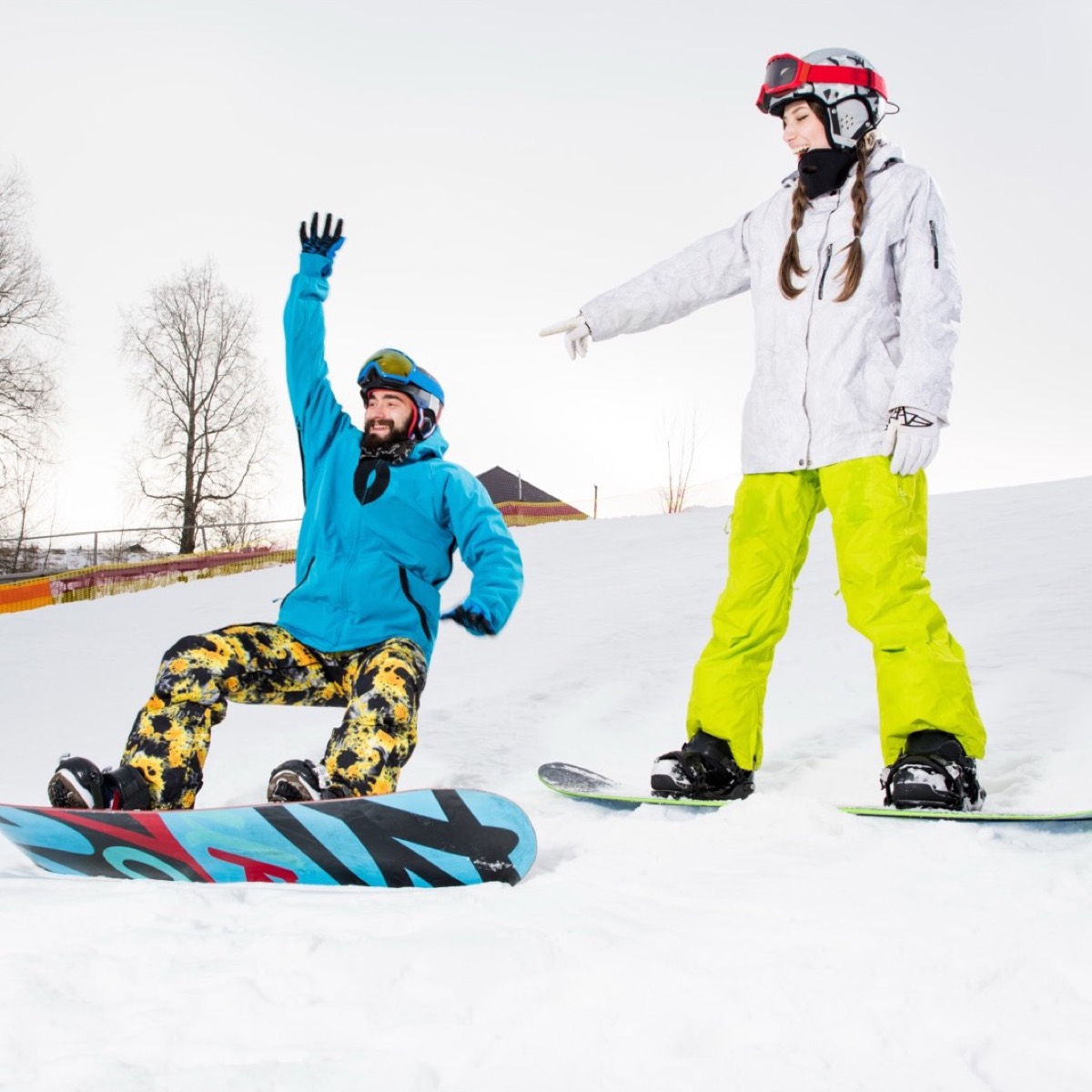
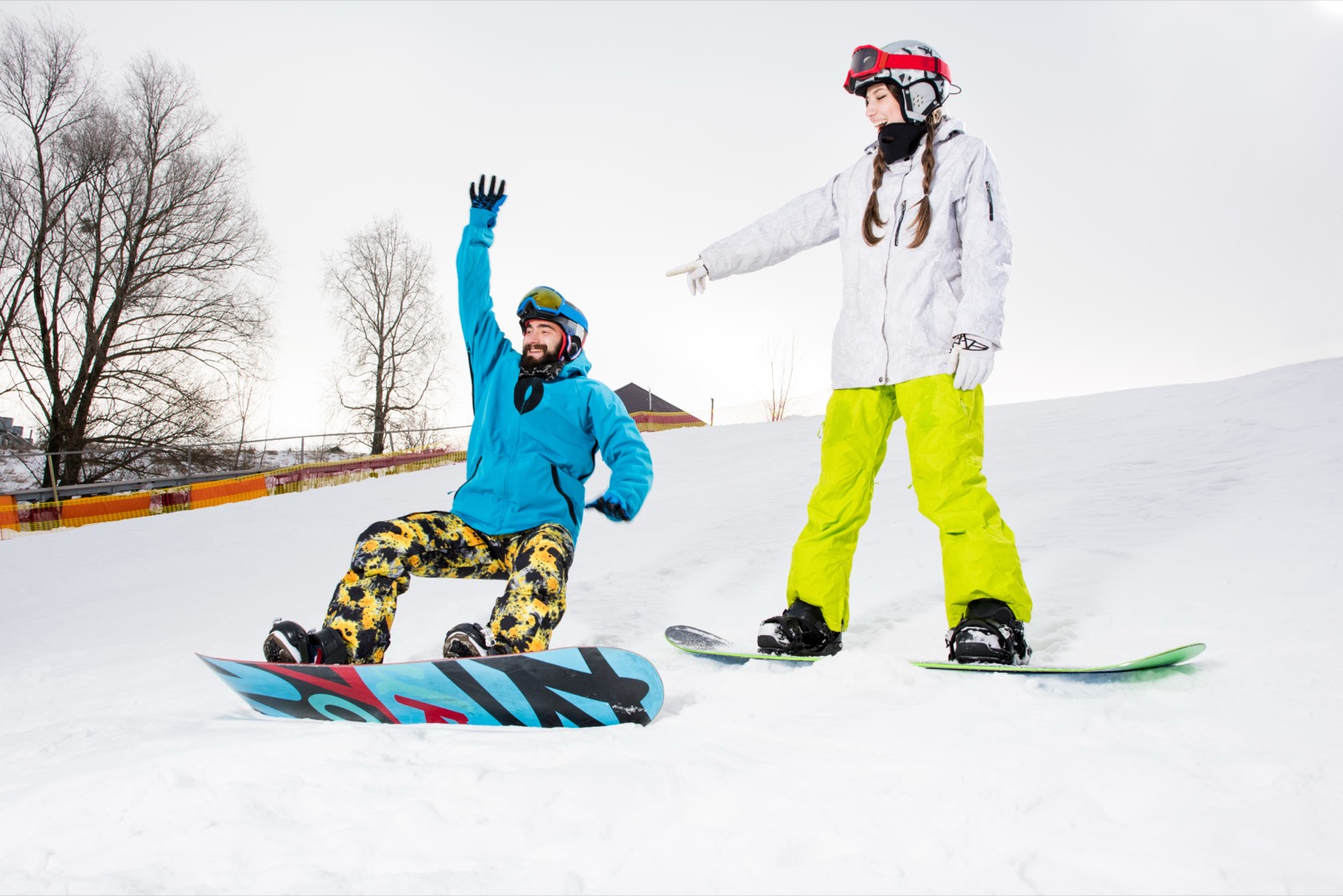
You will fall. Not occasionally, repeatedly, and mostly in the first couple of hours while your body works out that both feet are attached to one board.
Skiing feels natural early and gets harder as terrain steepens. Snowboarding is the opposite. The first day is the worst day, and riders who push through it often find day three feels dramatically better than a skier’s day three.
Knowing that in advance is genuinely useful. Most people who quit snowboarding quit on day one because they assumed it would keep feeling that way.
What you’ll actually work on
- Strapping in and standing up. Sounds trivial. Isn’t. Getting off the ground efficiently saves an enormous amount of energy.
- Skating. Moving with one foot out, which is how you get around flats and off the lift.
- Sideslipping. Sliding down with the board across the hill, controlling speed with your edge. This is the actual foundation, and foundations are the layer everything else sits on. See the performance iceberg.
- Falling leaf. Sideslipping while drifting side to side, which is your first real control.
- Linking turns. Sometimes day one, often day two. Don’t measure yourself against it.
If you finish your first day sideslipping confidently and getting off a lift without incident, that’s a good day. Turns will come.
What to wear, and the bits people forget
- A helmet. Non-negotiable for us, and beginner snowboarding involves more contact with the ground than almost any other snowsport.
- Wrist guards. The most useful thing a first-time rider can own. Wrists take the impact when you catch a toe edge, and wrist injuries are the classic beginner snowboard injury.
- Padded shorts. Not vanity. Your tailbone will thank you.
- Waterproof gloves and trousers. You’ll spend real time sitting in snow, and being wet by 11am ends the day early.
- Goggles, not sunglasses. They stay on when you fall. If you are curious about the heads-up display kind, we reviewed the Rekkie smart ski goggles over 60 days, though they are not what we would buy for a first day.
Where to do it around Tahoe
Pick somewhere with a gentle, wide learning area and a slow lift. Steepness is the enemy on day one, and so are crowds, because most beginner frustration comes from worrying about being in someone’s way.
We teach snowboarding at Sugar Bowl, which suits first-timers well. Our coaches hold AASI snowboard certifications alongside their alpine credentials, so a mixed group where some ski and some ride is completely normal for us.
Should you take a lesson or have a friend teach you?
Have the friend take you for coffee instead.
Snowboarding is one of the clearest cases where instruction pays for itself immediately. The early skills are counterintuitive, the failure mode is painful, and a well-meaning friend usually teaches you to survive rather than to ride. Most self-taught riders carry a habit for years that a coach would have fixed in twenty minutes on day one.
It also matters because bad first days are what make people give up. An instructor’s real job on day one is as much about managing frustration as teaching technique.
A realistic three-day arc
- Day one. Sideslipping, falling leaf, getting on and off the lift. Tiring and humbling.
- Day two. Linking basic turns on gentle terrain. This is usually the day it clicks.
- Day three. Riding a full green run top to bottom, starting to enjoy it rather than survive it.
If you can, ski or ride those days close together. Three consecutive days will take you much further than three weekends spread across a season.
Ready to try it? Check our availability, and tell us it’s your first time when you book so we pair you with the right coach.
Frequently asked questions
Is snowboarding harder than skiing?
On day one, yes, clearly. By day three, usually not. Skiing is easy to start and gets harder as terrain steepens; snowboarding front-loads the difficulty and then improves quickly. Most people who quit snowboarding quit on day one because they assume it stays that way.
Do I need wrist guards for snowboarding?
They are the single most useful thing a first-time rider can own. Wrists take the impact when you catch a toe edge, and wrist injuries are the classic beginner snowboard injury. Padded shorts are worth it too.
How long does it take to link turns on a snowboard?
Often day two, sometimes late on day one. If you finish your first day sideslipping confidently and getting off the lift without incident, that is a good first day. Measuring yourself against linked turns on day one mostly produces disappointment.
Should I let a friend teach me to snowboard?
We would not. The early skills are counterintuitive and the failure mode is painful, so a well-meaning friend usually teaches you to survive rather than to ride. Most self-taught riders carry a habit for years that a coach would have fixed in twenty minutes on day one.
What should I wear for my first day snowboarding?
A helmet, wrist guards, padded shorts, genuinely waterproof gloves and trousers, and goggles rather than sunglasses. You will spend real time sitting in snow, and being wet by 11am ends the day early.
Where should I learn to snowboard at Tahoe?
Somewhere with a wide, gentle learning area and a slow lift. Steepness and crowds are the two things that ruin a first day. We teach snowboarding at Sugar Bowl, which suits first-timers well.